
How Often Should You Seal Your Asphalt Driveway? Seasonal Maintenance Guide
Seal your asphalt driveway every two to three years to keep water, UV rays, and oil stains from breaking down the surface. New asphalt needs at least six months of curing before the first application. Portillo's Paving Co. sealcoats residential driveways across the East Bay and Tri-Valley using commercial-grade products rated for Bay Area temperature swings.
Late spring through early fall is the only reliable sealcoating window in the Bay Area because the material needs dry conditions and surface temperatures above 50°F to cure properly. Visual signs tell you when the sealcoat has worn through, and the schedule shifts depending on where in the Bay Area your driveway sits.
How Often to Sealcoat an Asphalt Driveway
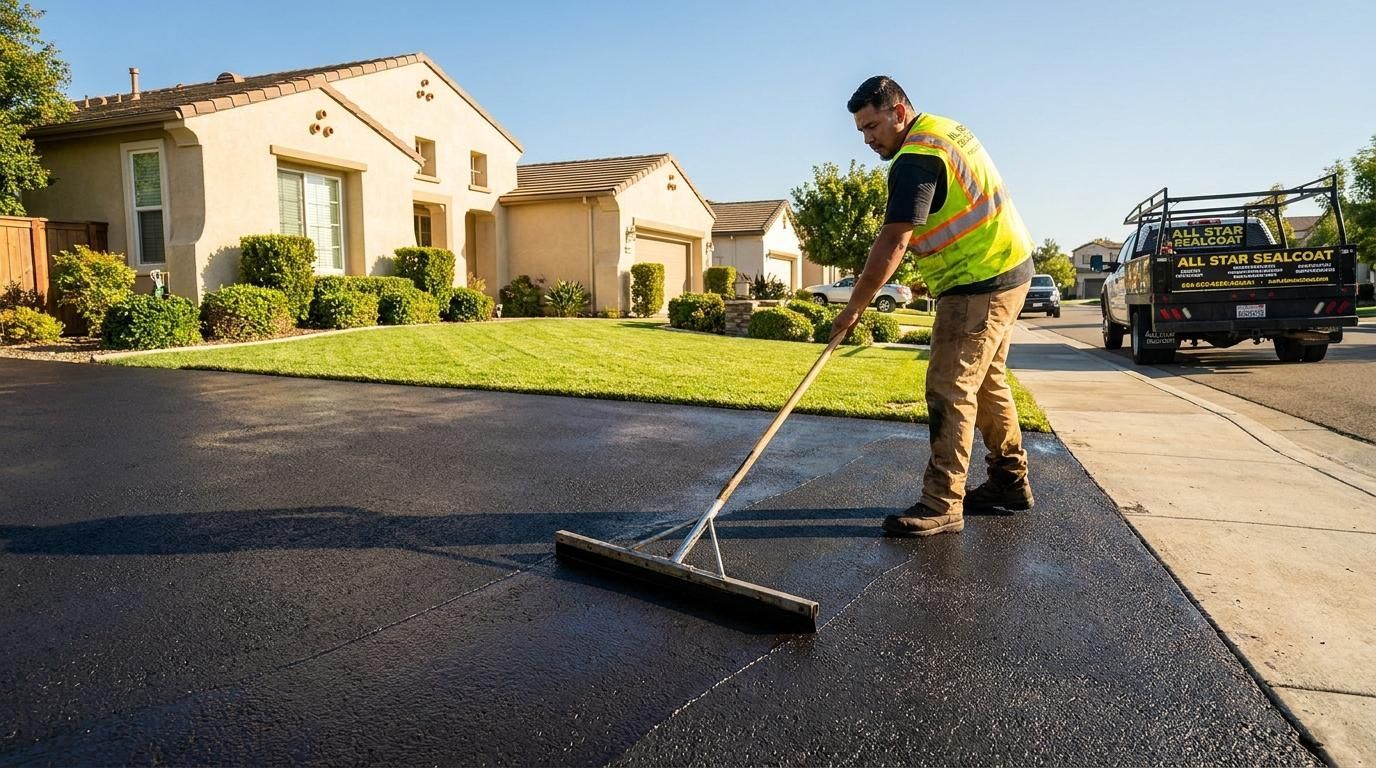
The standard interval is every two to three years for residential driveways. That timeline assumes moderate daily traffic and typical Bay Area weather exposure. Several factors push the schedule earlier or stretch it later.
Light-Use Driveways
A driveway that sees one or two cars daily in a mild coastal area can often stretch to three full years between applications. Cooler temperatures and marine-layer moisture slow the UV oxidation that breaks down sealant chemistry. Homeowners in these areas typically get the most life from each coat.
High-Traffic or Inland Driveways
Driveways in Walnut Creek, Brentwood, or Livermore that face daily summer temperatures above 95°F may need sealcoating closer to every two years. Heat accelerates oxidation and makes the surface brittle faster than coastal conditions do. Heavier vehicle traffic compounds the wear, especially on asphalt driveways that carry trucks or multiple daily vehicles.
Signs Your Driveway Needs Sealcoating Now
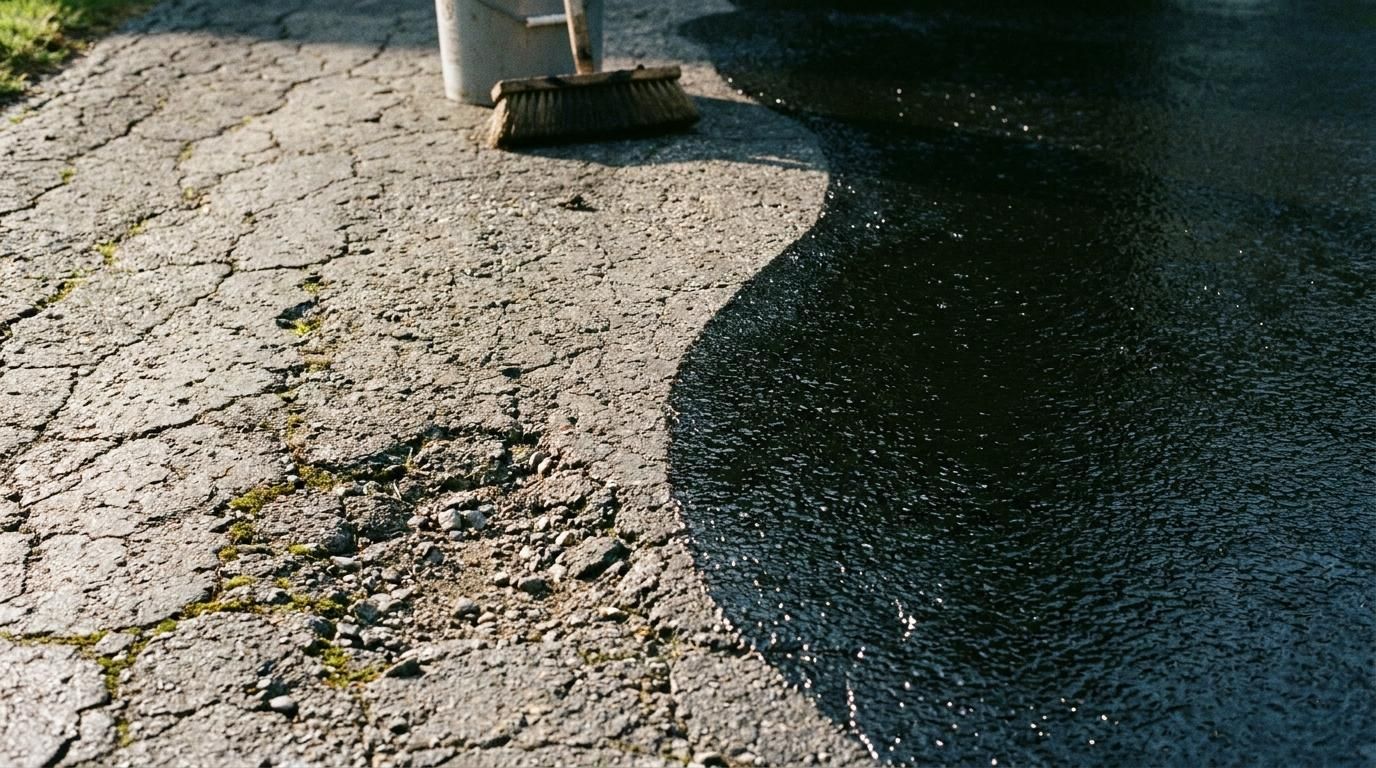
The calendar is a starting point, but visual cues tell you when the previous sealcoat has worn through and raw asphalt is exposed again:
- Fading from black to gray across large areas of the surface
- Small hairline cracks appearing in previously sealed sections
- Water no longer beading on the surface after rain
- Oil stains that sink into the asphalt instead of sitting on top
If two or more of these signs are visible, the surface is unprotected. Scheduling sealcoating before the next rainy season prevents cracks from widening over winter. The cost of sealcoating a driveway in the Bay Area depends on the size of your driveway, the condition of its surface, and the prep work required.
What Affects Sealcoating Timing in the Bay Area?
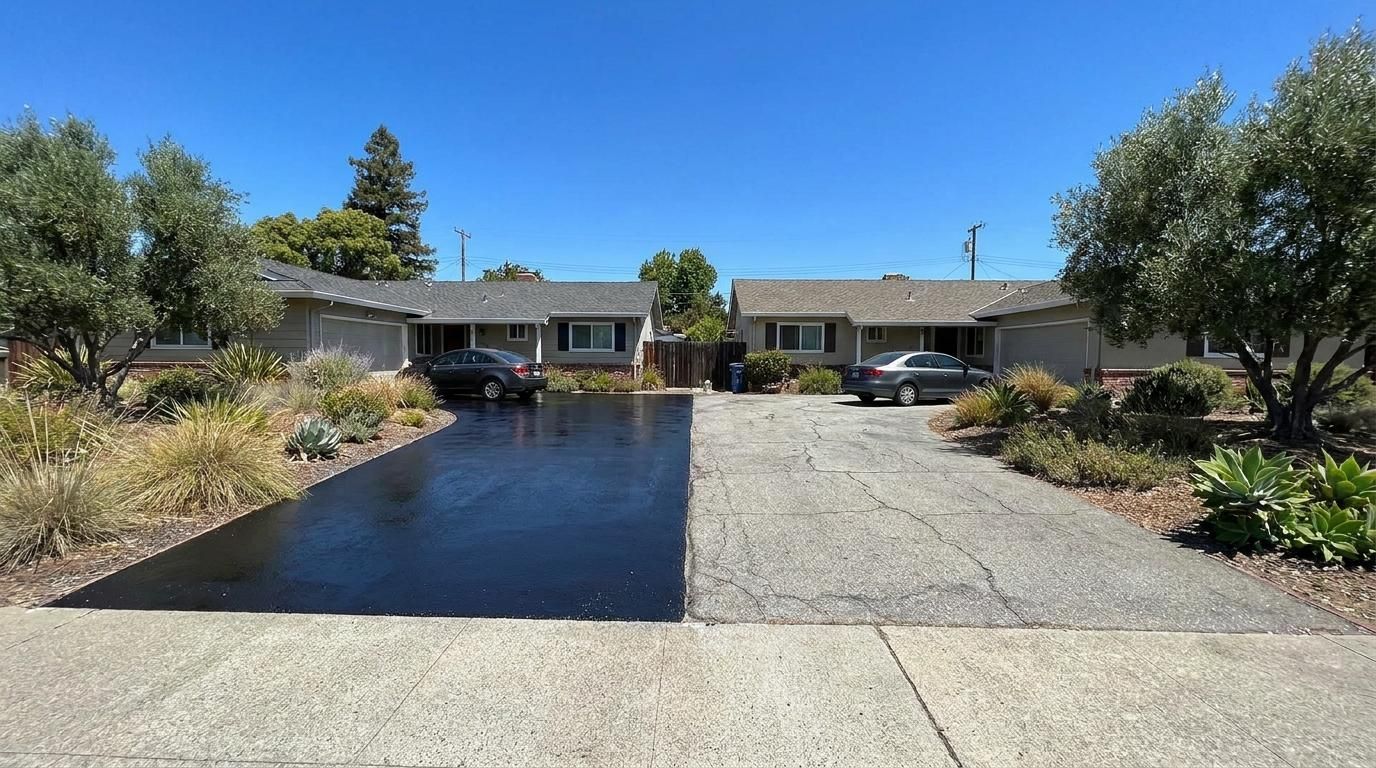
Bay Area microclimates create different maintenance timelines within a 30-mile radius. Two properties in the same county can need sealcoating on completely different schedules.
Coastal vs. Inland Exposure
Richmond and coastal East Bay driveways deal with salt air and consistent moisture, which breaks down sealant chemistry differently than heat does. The sealcoat may still look dark but lose its water-repellent properties within two years. Inland driveways face the opposite problem. Intense summer UV dries out the sealant faster, and thermal expansion stresses the bond between sealcoat and asphalt.
Tree Cover and Shade
Driveways shaded by large trees stay cooler, which slows UV degradation. But tree roots can heave the asphalt and create cracks that compromise the sealcoat from underneath. The net effect depends on root depth and proximity to the driveway edge.
Frequently Asked Questions
How much does driveway sealcoating cost in the Bay Area?
Residential driveway sealcoating typically costs $0.15 to $0.40 per square foot in the Bay Area, or $200 to $600 for a standard two-car driveway. The final price depends on surface condition, prep work, and whether crack filling is needed before the sealcoat goes down.
Can you sealcoat a driveway in winter?
Sealcoating requires dry weather and surface temperatures above 50°F for proper curing. In the Bay Area, that limits the reliable application window to roughly April through October. Applying sealcoat in cooler or wet conditions causes poor adhesion, premature peeling, and wasted material. Portillo's Paving Co. schedules jobs within that window to ensure proper curing.
Does sealcoating fix existing cracks in asphalt?
Sealcoating protects the surface but does not fill or repair existing cracks. Cracks should be filled with hot-pour sealant before the sealcoat layer is applied. Coating over unfilled cracks traps water underneath and accelerates damage to the gravel base layer rather than preventing it.
Keep Your Driveway Protected Year-Round
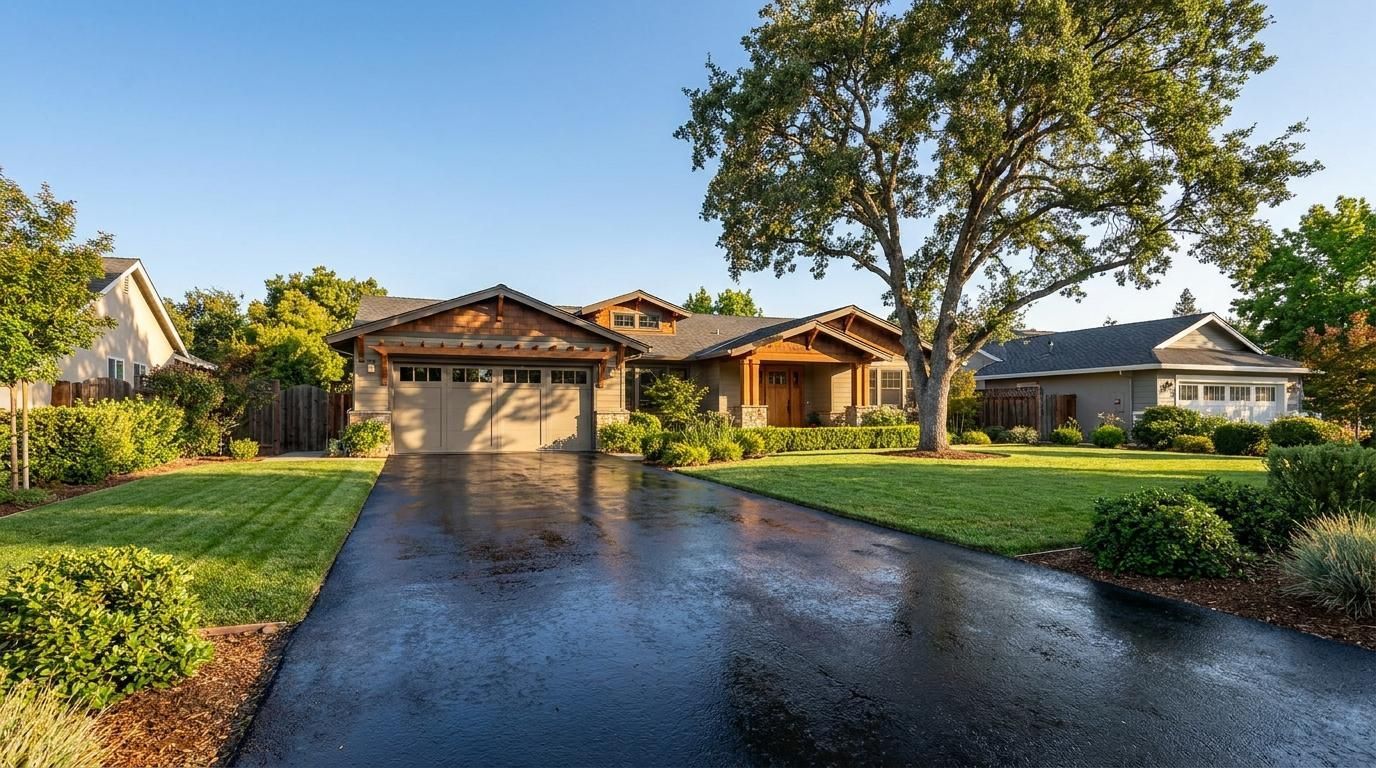
Every two to three years is the standard, but your specific timeline depends on sun exposure, traffic volume, and where your property sits in the Bay Area. Coastal driveways lose water repellency first. Inland driveways lose surface flexibility first. Both need sealcoating before damage becomes visible to stay ahead of repairs.
Contact Portillo's Paving Co. at (925) 499-7986 for a free sealcoating estimate.