
Stamped Concrete vs Pavers: Pros, Cons, & Key Differences
Stamped concrete and concrete pavers both create a decorative hardscape surface, but they differ in cost, repairability, and how they age. Stamped concrete runs $10 to $20 per square foot installed in the Bay Area, while pavers cost $20 to $35 per square foot. Individual pavers can be lifted and replaced without cutting into a monolithic slab, which gives them an edge in long-term maintenance. Portillo's Paving Co. builds stamped concrete driveways , patios, and walkways across the East Bay and Tri-Valley with patterns matched to each property.
Most homeowners assume pavers always last longer than stamped concrete, but that depends entirely on installation quality and the soil conditions underneath. A stamped slab poured over properly compacted base in the Bay Area can outlast pavers set on shifting clay if the base prep wasn't done right. Which one fits your property depends on how you weigh upfront savings against long-term repairability.
Cost Comparison: Stamped Concrete vs Pavers
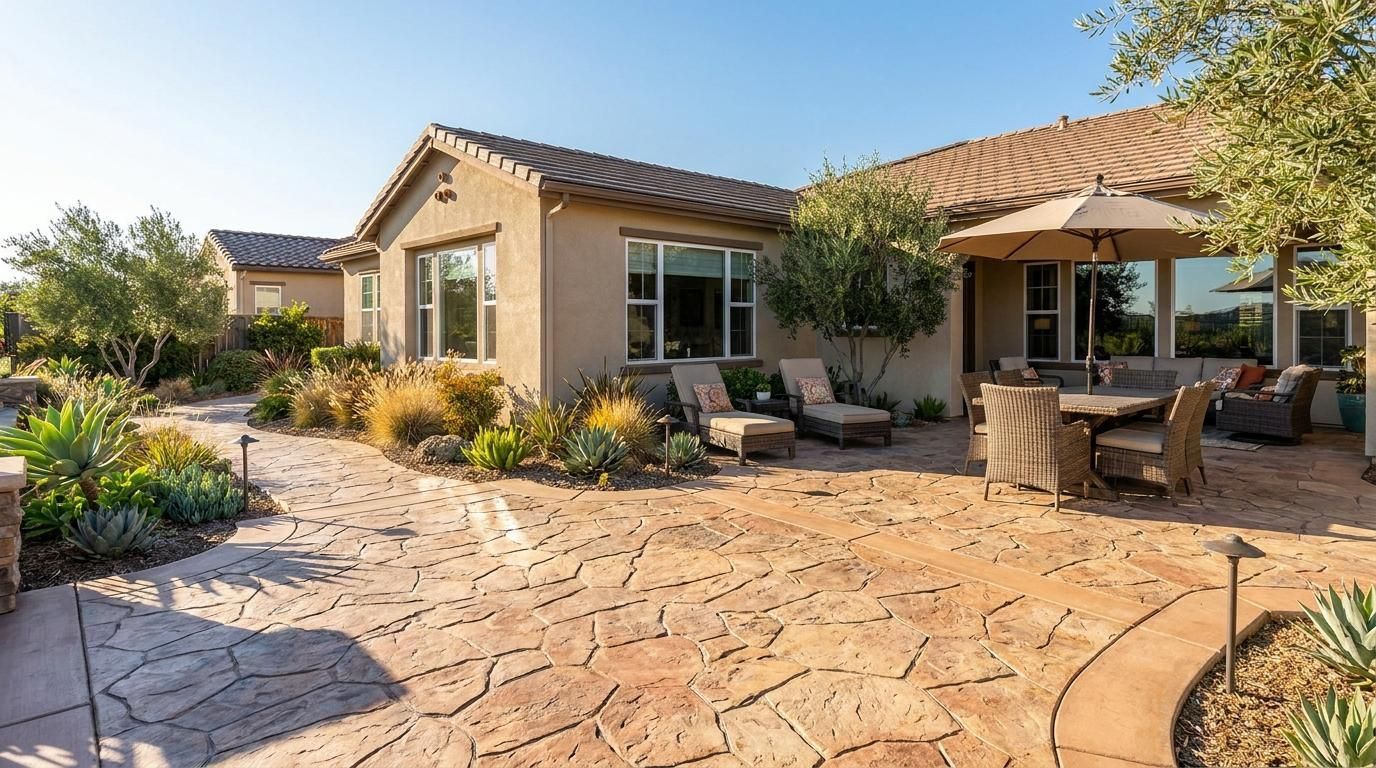
Upfront cost is the most common deciding factor between these two surfaces, and stamped concrete holds a clear advantage at installation.
Stamped Concrete Pricing
Stamped concrete runs $10 to $20 per square foot in the Bay Area depending on pattern complexity, number of colors, and site prep. A 500-square-foot patio typically costs $5,000 to $10,000 installed. Basic patterns like ashlar slate stay toward the lower end, while multi-color stone patterns with borders push toward the top of the range. Exposed aggregate is another decorative option that falls in a similar price range.
Paver Pricing
Concrete pavers cost $20 to $35 per square foot installed in the Bay Area. That same 500-square-foot patio runs $10,000 to $17,500. Natural stone pavers like flagstone or travertine push the range to $40 to $55 per square foot. The higher price reflects more labor-intensive installation, as each paver is set individually over a compacted sand and gravel base. Paver installation is a specialty service typically handled by hardscape contractors rather than concrete or paving companies.
Durability and Maintenance
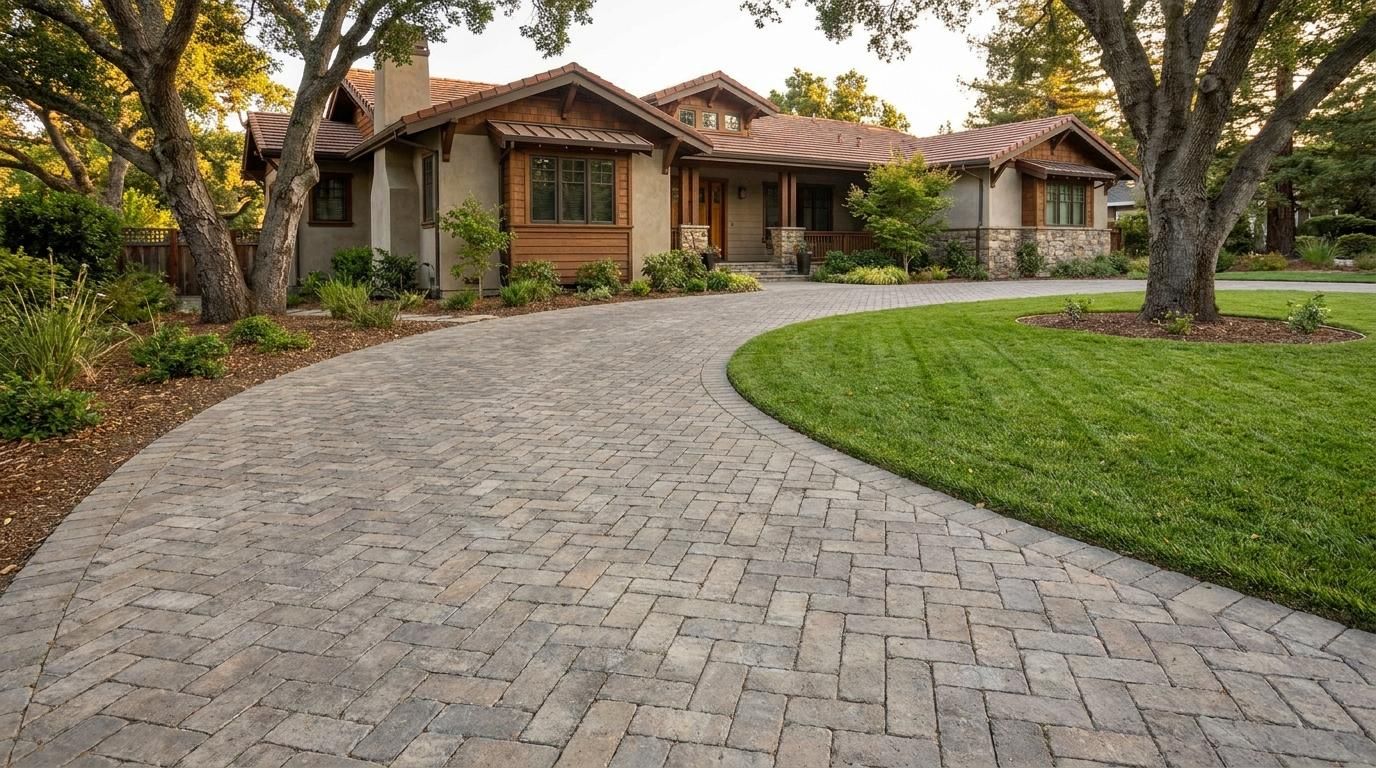
Both surfaces handle Bay Area weather well, but they age differently and require different types of upkeep.
Stamped Concrete Maintenance
Stamped concrete needs resealing every two to three years to maintain color and surface protection. Without resealing, the color fades and the surface becomes more vulnerable to hairline cracking. Resealing costs $0.50 to $1.50 per square foot and can be done in an afternoon. Cracks in stamped concrete require professional repair because patching a monolithic slab without visible seam lines takes skill.
Paver Maintenance
Pavers don't need sealing, though some homeowners seal them for color enhancement. Individual pavers that crack or shift can be pulled up and replaced without affecting surrounding units. That modular repairability is pavers' strongest advantage. However, pavers can shift, settle unevenly, or develop weed growth between joints if the base compaction or driveway foundation work was insufficient.
Which Surface Fits Your Bay Area Property?
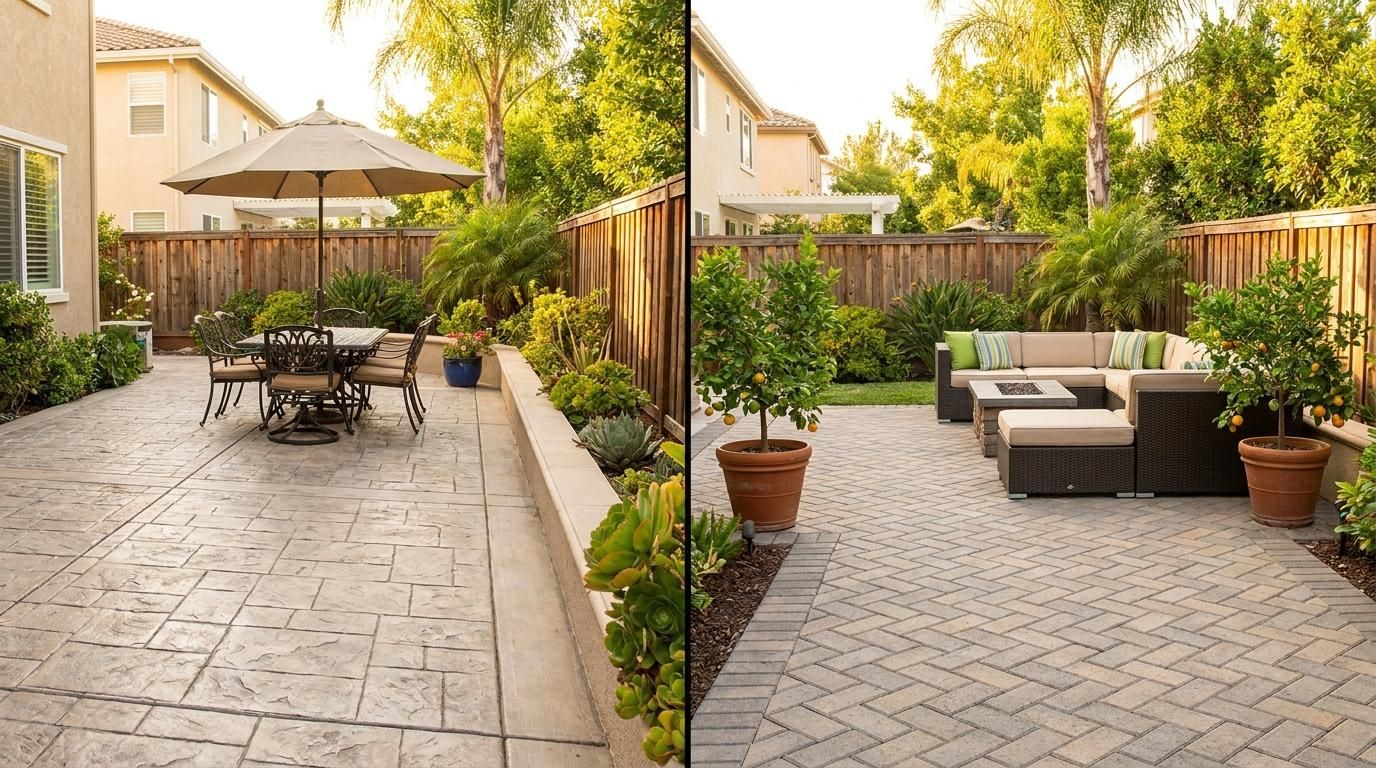
The best choice depends on your budget, your property's soil conditions, and how you plan to use the surface.
Stamped concrete is the stronger option for Bay Area homeowners who want a decorative surface at a lower upfront cost and are willing to reseal every few years. It performs well on properly graded sites where drainage has been planned. In Fremont and other Alameda County cities with high property values, stamped concrete patios and driveways are a popular choice for curb appeal without the premium price of natural stone.
Pavers make more sense when the surface needs to accommodate future utility access, when individual sections may need replacement due to tree root movement, or when the homeowner prioritizes zero-sealing maintenance. For paver installation, look for a hardscape contractor who specializes in interlocking paver systems. The base prep is different from poured concrete and requires specific compaction techniques.
Frequently Asked Questions
Does stamped concrete crack more than pavers?
Stamped concrete can develop hairline cracks over time, especially on expansive clay soils common in the Bay Area. Proper control joints and base compaction reduce cracking significantly. Pavers don't crack the same way because each unit moves independently, but they can shift, settle, or develop gaps between joints if the base compaction fails.
How long does stamped concrete last in the Bay Area?
Stamped concrete typically lasts 25 to 30 years or more with regular resealing every two to three years. Portillo's Paving Co. installs stamped concrete with reinforced bases designed for Bay Area soil conditions, which helps prevent the settlement cracking that shortens lifespan on poorly prepared sites.
Are pavers better for driveways than stamped concrete?
Pavers handle heavy vehicle loads well because individual units flex with the base rather than cracking under stress. Stamped concrete driveways also handle vehicle traffic when poured at proper thickness with reinforcement. The choice depends on budget, aesthetic preference, and whether you want the option of replacing individual sections later.
Pick the Surface That Fits Your Property
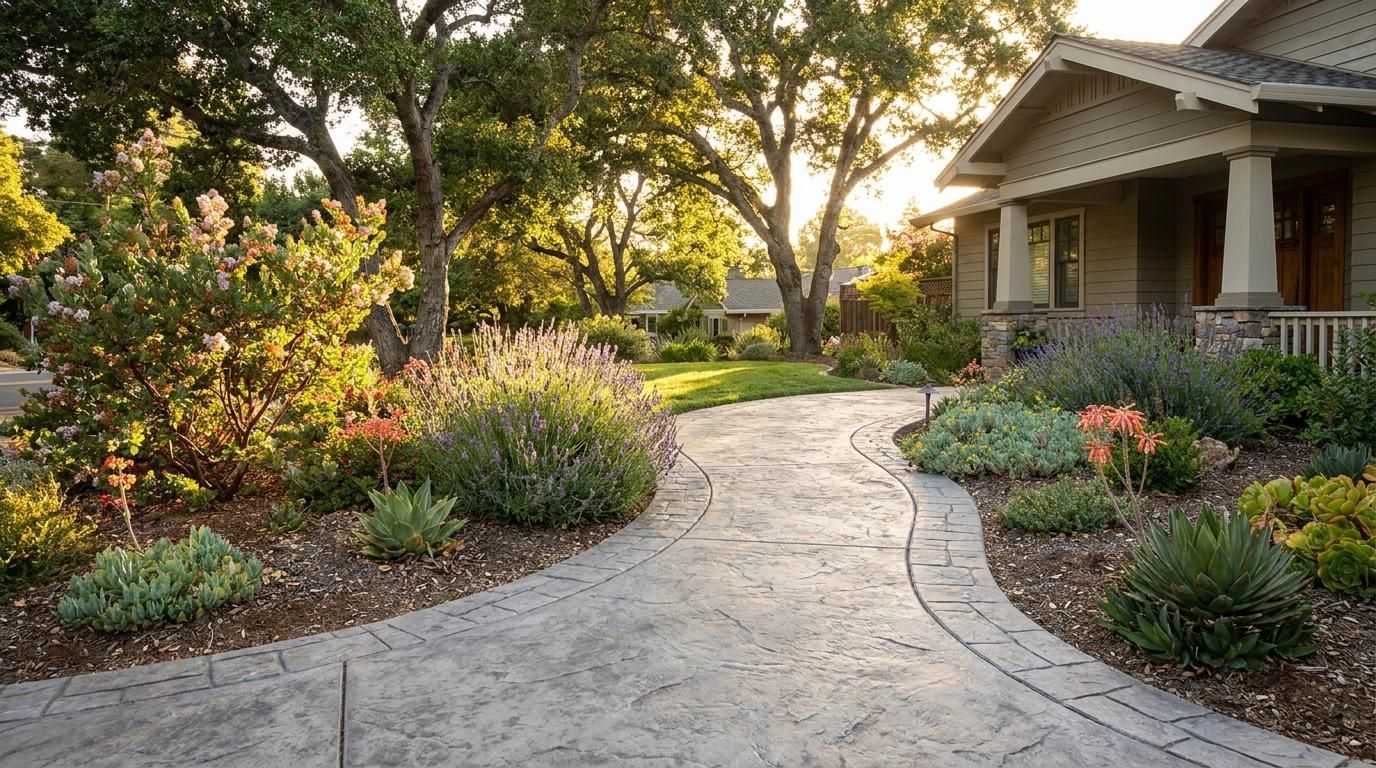
Stamped concrete delivers a decorative look at a lower installed price, but the trade-off is periodic resealing and monolithic repair if cracks appear. Pavers cost more upfront but offer modular repairability and no sealing requirement. Both surfaces last decades in the Bay Area when installed on a properly prepared base.
For stamped concrete driveways, patios, and walkways, contact Portillo's Paving Co. at (925) 499-7986 for a free estimate. For paver installation, reach out to a local hardscape contractor who specializes in interlocking paver systems.