
Asphalt vs Concrete Parking Lot: 2026 Cost, Durability, and Lifespan Compared
For a commercial parking lot, the choice between asphalt and concrete usually comes down to five variables: upfront budget, traffic load, heat, drainage, and how much downtime the property can absorb. In most Bay Area lots, asphalt costs less to install and can be repaired faster, while concrete earns its higher price in targeted high-stress zones. As a family-owned Bay Area contractor, Portillo's Paving Co.'s commercial paving recommendations are built around a lot's actual site conditions rather than a one-size default.
Most property managers start comparing the two materials after a set of bids comes back with confusing price gaps. The more useful question isn't which surface is "better," it's which one fits a particular lot's traffic, soil, and tolerance for closure. Let's compare 2026 costs, durability, lifespan, and maintenance, and where a mix of both materials makes the most sense.
Asphalt vs Concrete Parking Lot Costs in 2026
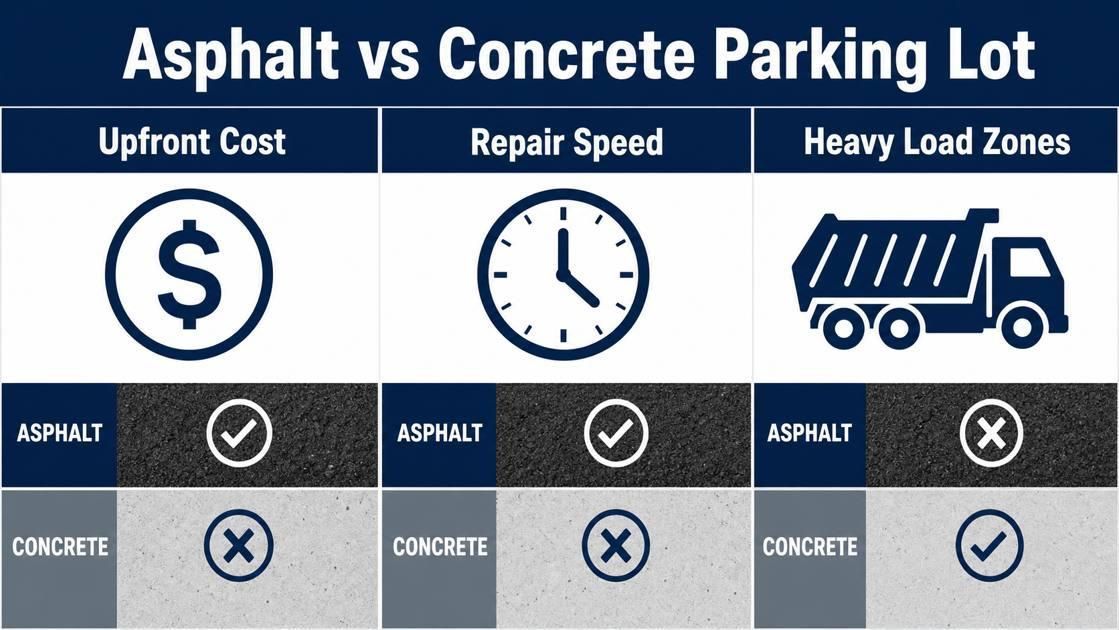
Asphalt usually has the lower initial parking lot cost, especially for larger Bay Area lots. Concrete usually costs more upfront because forming, finishing, curing, and joint work take longer.
For commercial planning, compare the whole system, not only the surface layer. A parking lot with a weak base rock, poor slope, or drainage problems can fail early in either material.
Key pricing factors include:
- Existing pavement removal and disposal.
- Subgrade condition below the planned lot.
- Base rock depth and compaction needs.
- Drainage upgrades, catch basins, or swales.
- Traffic load from cars, trucks, dumpsters, or deliveries.
Asphalt can also reduce business downtime. Many lots can reopen faster than concrete areas, because asphalt needs less cure time before regular traffic returns.
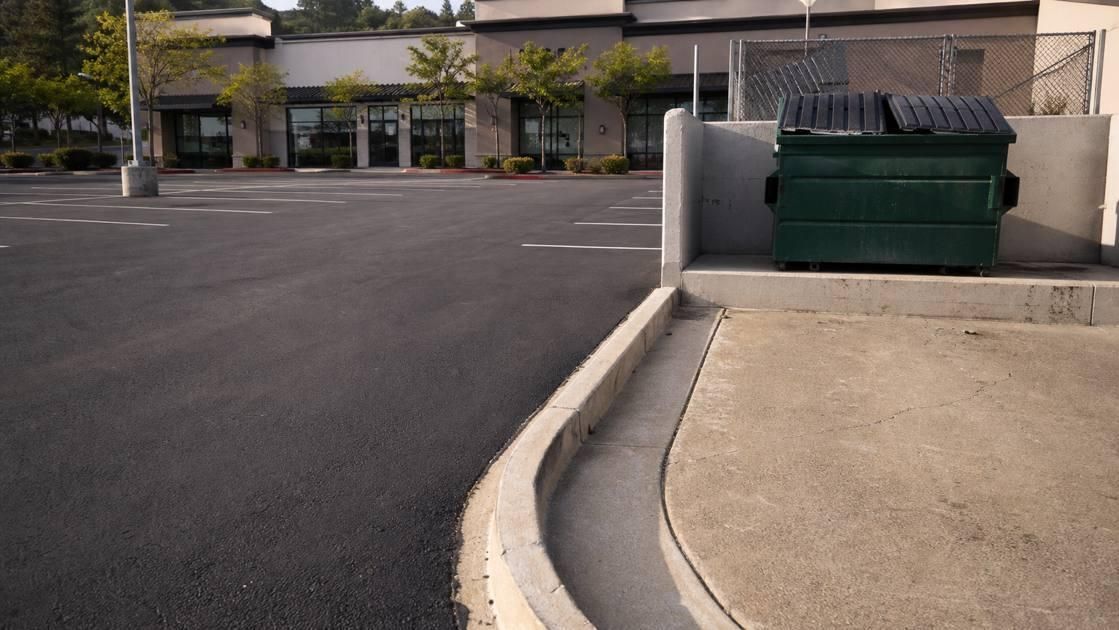
Concrete still makes sense in targeted zones. Dumpster pads, loading approaches, curbs, and walkways can benefit from concrete's stiffness.
Durability, Lifespan, and Maintenance Tradeoffs
Asphalt flexes under movement, which helps on many Bay Area lots with variable soils. Concrete is stiffer, so it resists rutting but can crack when movement concentrates at joints.
A commercial lot in Walnut Creek faces hotter inland summers than a lot near Richmond's marine air. Heat softens asphalt surfaces, while moisture speeds oxidation near the Bay.
Durability improves when the design matches the use:
- Asphalt handles broad parking fields when the base is compacted correctly.
- Concrete works well at heavy point loads, such as trash areas.
- Seal coating helps asphalt resist water, oil, and sun exposure.
- Joint spacing helps concrete control where cracking appears.
- Drainage slope moves water before it reaches the base.
Commercial asphalt lots often need seal coating every one to two years in high-traffic conditions. That cadence matches Portillo's Paving Co.'s website guidance for busy commercial surfaces.
Plan your parking lot maintenance around operations:
- Crack sealing keeps water out of the base.
- Patching handles isolated potholes before edges widen.
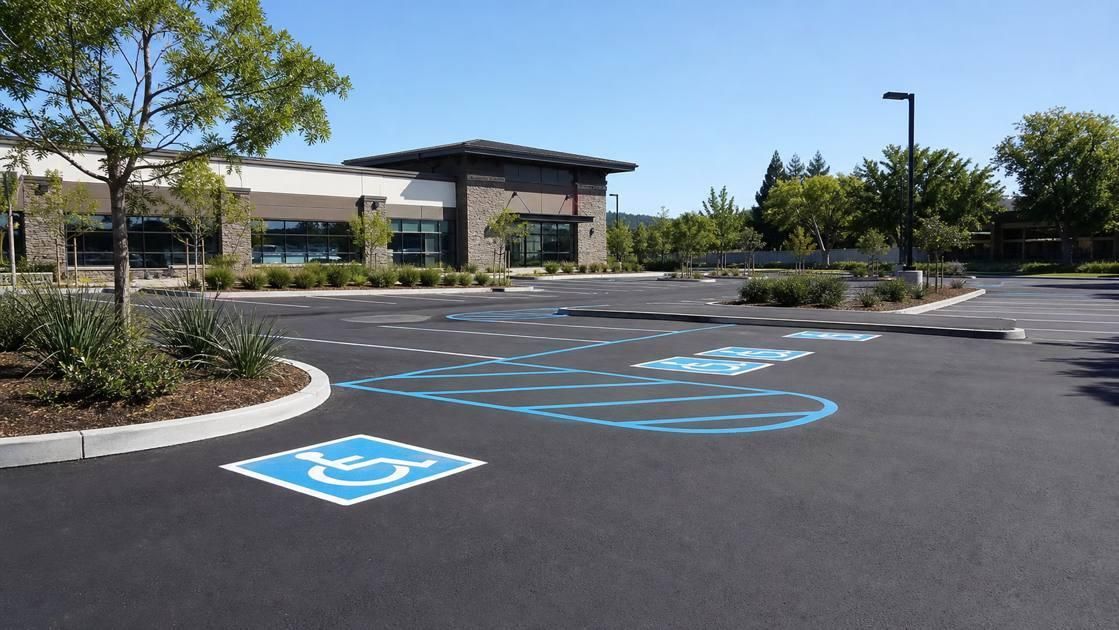
- Striping restores traffic flow and accessible space visibility.
- Concrete panel replacement needs more cure time.
Portillo's Paving Co. assesses the lot's microclimate before choosing thickness, slope, and recommending how the surface should be repaired.
Frequently Asked Questions
Is asphalt or concrete better for Bay Area retail parking lots?
Asphalt is often better for broad Bay Area retail parking fields because it costs less upfront and phases repairs more easily. Concrete can still work well for curbs, walkways, pads, and loading stress points. The best mix depends on traffic, drainage, and closure limits.
How long should a commercial asphalt parking lot last before resurfacing?
A commercial asphalt parking lot can last 15 to 25 years before requiring resurfacing as long as the base drains well and maintenance stays current. Heavy trucks, standing water, and skipped crack sealing shorten that timeline. Portillo's Paving Co. checks those causes during parking lot evaluations.
Should a Bay Area business choose concrete for dumpster pads?
Concrete is often a smart choice for dumpster pads because trash trucks create concentrated loads. Asphalt can rut under repeated heavy wheels in one spot. A mixed design can use asphalt across the lot and concrete flatwork where point loads are strongest.
Choose by Traffic, Drainage, and Downtime
Asphalt is the right choice for most open parking areas. It costs less upfront, can be repaired faster, and can be done in sections so the business stays open. Concrete is worth the extra cost in a high-stress areas like dumpster pads, loading zones, and curbs, where its stiffness matters more than reopening quickly. The strongest lots usually use both, each where it performs best.
When you're comparing parking lot bids, ask how each contractor handles drainage, base depth, traffic load, and maintenance timing, not just the per-foot price. Contact Portillo's Paving Co. at 925-499-7986 for a Bay Area parking lot estimate.